Performing

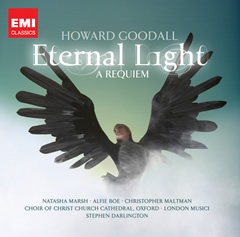
Eternal Light: A Review

Eternal LightI recently spent an absorbing afternoon getting acquainted with Howard Goodall’s Eternal Light: A Requiem from 2008. The piece was commissioned by London Musici, and was recorded by Oxford’s Christ Church Cathedral Choir some months before its premiere with the Rambert Dance Company. As you might imagine from Goodall’s previous work, it sits squarely in the post-Rutter choral tradition of new music that is accessible to amateur choirs.

On a related theme…

In my recent post about the concept of ‘theme’ as it is used in barbershop culture, I neglected to point out its background. It is a relatively new term in the scheme of things, having been introduced into the vocabulary of the judging system in the 1993 category changes.

Maybe I should take a step back for those who aren’t familiar with the history of the barbershop judging system. Whilst there has been a relatively stable approach since the 1940s in that contests are judged by several people, each of whom has a set number of points to award in a specific category with its own particular focus, the number of categories, their names and their scoring methods have undergone periodic revisions over the years.*

Performance Style in the Age of Recordings

One of the main interpretive challenges to face classical musicians is the ambiguity of notation. The dots on the page are very informative about what to play, but mostly leave us guessing about how. What looks like the ‘same’ notation will carry different expectations for performance style at different points in history and in different places. Formal training teaches the typical answers to these questions, and advanced training provides the research skills to seek out mores specific answers for particular repertories.

Of course, even armed with all the available information – about historical instruments, and the techniques used to play them, about the treatises on performance or aesthetics – the musician still has the imaginative task of converting that into real sounds. An interpretation thus represents a statement of how the performer concludes the music should go.

Now, for people working with popular repertories of the last 50 years or so, the task is very different, since the definitive text is now no longer on paper, but a recording.

Managing Stage Fright

At last week’s session of the Inspire Your Choir course I’m running for MusicLeader West Midlands, we had a really fruitful discussion about how to help our singers go into performances calmly and confidently and be happy that they can deliver their best to their audiences. It included lots of practical tips, and gradually three main themes emerged:

Singing Long Phrases

I’ve had several conversations with members of Magenta recently in which someone has said that they find it hard to have enough breath to last to the end of the phrase. In any choir, breath control is an ongoing project, but it is also something that individuals can continue between rehearsals. So this post is for them, and for anyone else who has ever run out of breath early (so that includes me, then….).

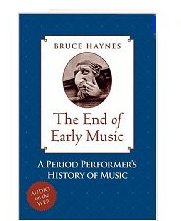
The End of Early Music?

Haynes2007I’ve been dipping into Bruce Hayne’s 2007 book The End of Early Music, and enjoying it in a somewhat argumentative way. It’s written in a lively fashion, in the tradition of and strongly influenced by writers such as Christopher Small and Richard Taruskin – writers who like to take what we thought we knew and reinterpret it until they jiggle us out of our complacency.

Some people find this kind of style irritatingly unscholarly, but it’s great teaching material. Nothing like a spot of outrage to awaken the critical faculties, after all. So I find it easy to like a book that includes sentences like: ‘There was a time when “AUTHENTIC” sold records like “ORGANIC” sold tomatoes’.

Musical Sense and Poetic Sense

A criticism levelled at amateur singers* is that their ideas of how to interpret songs are led almost entirely by the lyric with little concept of how to handle musical elements. Indeed, I have myself critiqued approaches to interpretation that are story-led to the exclusion of everything else. But surprisingly often you hear phrasing that cuts across the sense of the lyric – breaths that cut a sentence in two, or commas sung through as if the two clauses belonged together.

I think this happens mostly in places where the surface structures of lyric and music don’t completely coincide. The singers subconsciously parse the phrase structure into its simplest musical structure – and in its extreme form, this comes out in the nursery-rhyme phrasing I wrote about back in October. But there are more sophisticated versions of this. For example:

Piano Revelation

Out with the old...Out with the old......and in with the new...and in with the new

I bought a new piano recently. The one I grew up with (a hand-me-down from my great aunt) has done sterling service, but I have grown out of it. Since I’ve stopped working in a music college, where I had a lovely Yamaha upright in my office, I’ve been finding I miss being able to play a good instrument. It’s a long time since I’ve been playing at anything like a professional level, but pianism is still an important part of how I think.

Anyway, I had a mild revelation while talking to my mum about the quality of my old piano – the ways in which it’s okay, and the ways in which it’s limited.

...found this helpful?

I provide this content free of charge, because I like to be helpful. If you have found it useful, you may wish to make a donation to the causes I support to say thank you.


Archive by date

Syndicate content Syndicate content