Coaching

Slowing things down with SpecsAppeal

specsappealmar26

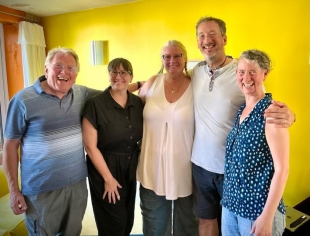
I spent Sunday with SpecsAppeal working on a combination of things that were specific to the two songs they brought with them and things that will apply to everything they sing. Unlike my difficult-to-summarise exploration of musical detail in Scotland a couple of weeks ago, we found a clear theme emerging during the day that applied in multiple different contexts: the value of taking things slowly.

The first and most literal of these recurred throughout the day: blocking passages a chord at a time, taking time to make friends with each one before you move on. In a texture where you have a four-part chord for every melody note, there’s a lot of music going on, and your brain doesn’t have time to fully absorb it all as it flies by in tempo. If you stay with a chord until you can let go of your own note and attend to the whole, your brain can make sense of it, and provide all the microadjustments to tuning, balance, tone- and vowel-match to bring it into focus.

Digging into the Detail with Albacappella

albacappellafeb26

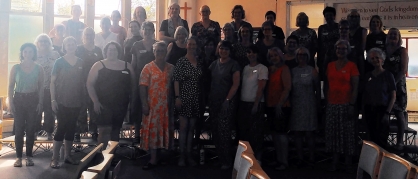
I’ve just spent a happy weekend with Albacappella at their chorus retreat just outside Aberdeen. My remit was to work with them on an arrangement they had commissioned for this year’s LABBS Convention, although we also looked at their other contest piece and did some more general technique work that will apply across the board.

Some coaching trips develop a theme that runs through all our work. Looking back on this one, it feels rather more miscellaneous in focus, and thus hard to summarise. I think this is mainly because it was organised primarily around musical detail rather than skill development, so our focus shifted according to the needs of the immediate musical context. The reason for this approach is that everyone was specifically interested in what an arranger had to say about why and how they ended up with what they were singing.

IABS Spring Sing

IABS Spring Sing 2026

I’ve just spent a happy weekend in Athlone as part of an international faculty at the Irish Association of Barbershop Singers’ annual spring education event, including educators from the US (Vocal Spectrum, Don Campbell) and Germany (Lucas Bitzer) as well as me from the UK. The structure of the event is built around coaching for choruses and quartets from across the association, supplemented by classes on various aspects of barbershop craft and a daily Big Sing chorus experience.

My role in the team was to do a modicum of coaching, but mostly to deliver sessions in a new initiative to develop Musical Directors and Music Teams. This included workshops for those already in post as well as sessions designed to give some initial training in musical leadership to help people not currently in such roles gain some confidence and experience to open up future possibilities for them. All organisations need to develop their pipeline of future leaders.

Back with BAC

BACfeb26

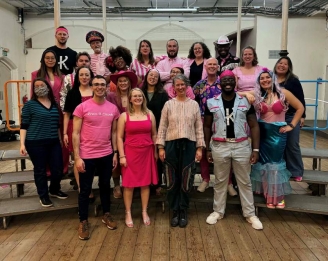
A week ago Saturday took me down to Bristol to coach Bristol A Cappella, in anticipation of their trip to Wuppertal to compete in the World Mixed Barbershop Chorus contest hosted by BinG! in March. It will be their final contest outing for the Barbie set that they took to the European and the British national contests last year. As such, we were working with material they know very well, and so the brief was all about enhancing the execution of the well-established concept rather than re-imagining anything. The main areas I was asked to focus on were resonance, swooshithroughiness, and making sure the choreography was working well with the voices.

Getting into the Flow with Mosaic

mosaicjan26

I spent Sunday happily in Norwich with Mosaic, a mixed-voice barbershop chorus who meet once a month, and who are preparing to participate in the British Association of Barbershop Singers’ Convention in May. Last year I had revoiced an arrangement for their contest set, and we spent a good deal of the day working on that, with a little TLC also on their other song.

The general trajectory of our work on both songs was to start from the holistic and work our way towards the detail. The reason for this is that global concepts often improve a lot of details at once, and so save you a lot of effort compared with diving immediately into the nitty-gritty. The chorus’s MD Chrissie had identified flow as a primary area she wanted to develop in the delivery of my arrangement, and it turned out that quite a lot of what we worked on with that song was also relevant to the other.

Listening Deeply with Bristol A Cappella

BACnov25I spent Saturday with my friends at Bristol A Cappella, revisiting their set from the European and BABS Conventions back in May in preparation for the World Mixed Chorus contest in Germany next Spring. By now they are deeply familiar with the music and their performance plans for it, and this presents the opportunity to do the kind of deep work that only becomes possible when you no longer have to focus on what you are doing and can direct your attention to the how.

Much of our work focused on listening techniques, finding ways to enhance everyone’s perception of what they were doing, since the first stage of refining your execution is increasing the acuity with which you hear the detail. Duetting inevitably played a part in this, with a lot of micro-adjustments making themselves through the process in addition to the explicit observations singers made as we walked through the process.

Following Up with Surrey Harmony

In the character of robots...In the character of robots...

Wednesday took me back to Coulsdon for another visit to Surrey Harmony. Two months on from my previous visit, they had had time to work with the ideas we explored in June, and we could see what was working, what needed further support, and what could usefully be added. And once again, we were working both to support the development of their director’s rehearsal and conducting skills and to build the skills of the singers.

Indeed, these two things often work hand in hand. Their MD Penny had a clear idea of the challenges she was facing: things that she knew she wanted to improve but was struggling to get the results she wanted. Hence, the coaching processes of diagnosis and intervention served both to help solve the problems and to model ways to go about solving them.

Chorus and Director Coaching with Surrey Harmony

Surrey Harmony Jun25

Wednesday took me down to Coulsdon to see my friends at Surrey Harmony. I last visited them just as we were coming out of covid, and I have very fond memories of the joy of being able to get back to coaching again with them. Since then they have had a change of director, and their new one, Penny, is by chance someone I had previously known through the Association of British Choral Directors.

Our remit on this occasion was to help the director with her musical leadership skills to develop her effectiveness in rehearsal. Part of this involved mediating between the classical choral experience she brings with her and the barbershop heritage of the chorus. There is a good deal of common ground in the praxis of the two genres, but there are also differences that one doesn’t always realise are there until you find yourself in the middle of a miscommunication. This was a journey I travelled myself nearly 30 years ago, and it informed the research questions of both my books, so it was a question I felt I understood well.

...found this helpful?

I provide this content free of charge, because I like to be helpful. If you have found it useful, you may wish to make a donation to the causes I support to say thank you.


Archive by date

Syndicate content Syndicate content