Learning

Slowing things down with SpecsAppeal

specsappealmar26

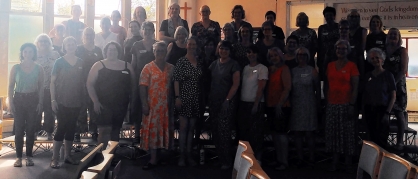
I spent Sunday with SpecsAppeal working on a combination of things that were specific to the two songs they brought with them and things that will apply to everything they sing. Unlike my difficult-to-summarise exploration of musical detail in Scotland a couple of weeks ago, we found a clear theme emerging during the day that applied in multiple different contexts: the value of taking things slowly.

The first and most literal of these recurred throughout the day: blocking passages a chord at a time, taking time to make friends with each one before you move on. In a texture where you have a four-part chord for every melody note, there’s a lot of music going on, and your brain doesn’t have time to fully absorb it all as it flies by in tempo. If you stay with a chord until you can let go of your own note and attend to the whole, your brain can make sense of it, and provide all the microadjustments to tuning, balance, tone- and vowel-match to bring it into focus.

Tips for Improving Choral Sight-Singing

A singer recently asked me if I had any tips to help improve sight-singing skills (‘apart from just practising’, he added, so that’s the easy answer gone). My reply was that that sounded like a blog post waiting to happen and I have spent the intervening time realising that I’d now have to do some thinking about it.

Because of course, practising is the key thing. You only get good at doing a thing by doing that thing. But the question remains as to what activities to include in your practice. Are there ways we can leverage the time to usefully hone specific aspects of the skill in ways that produce a more useful improvement than just ploughing through lots of music?

The two big challenges that sight-singing presents are, in my experience, keeping a handle on pitch, and staying with the tempo. For both, climbing back into the music when you fall out of it is central to success. Because we are all likely to make mistakes (see under ‘human beings’, and especially subcategory ‘human beings who want to get better at something’). The key differentiator between successful and unsuccessful sight-reading is less about the mistakes themselves than about the recovery from them.


Exploring the Expressive Beat with abcd

Course participants with their certificatesCourse participants with their certificates

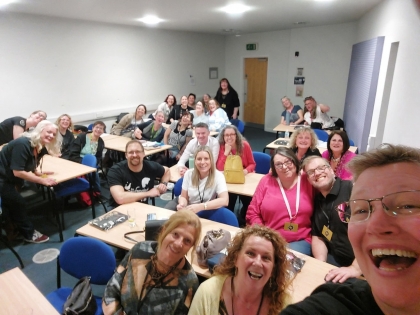
I spent the weekend teaching the Association of British Choral DirectorsInitial Conducting course, in its new two-day format. I wrote in the past about the educational value of the previous structure of four one-day sessions a month apart. The practical downside of it was that it was hard for people to attend to the whole course, and the whole-weekend format was devised in response.

When preparing for the weekend it felt at first like trying to fit a quart into a pint pot, but as there is the expectation that people will typically do the course more than once before being ready to progress to the Intermediate course, it turned out to be actually quite manageable. And the core practical work has always been strongly tailored to individual needs, with people at somewhat different stages learning together, so in that sense it hasn’t really changed.

IABS Spring Sing

IABS Spring Sing 2026

I’ve just spent a happy weekend in Athlone as part of an international faculty at the Irish Association of Barbershop Singers’ annual spring education event, including educators from the US (Vocal Spectrum, Don Campbell) and Germany (Lucas Bitzer) as well as me from the UK. The structure of the event is built around coaching for choruses and quartets from across the association, supplemented by classes on various aspects of barbershop craft and a daily Big Sing chorus experience.

My role in the team was to do a modicum of coaching, but mostly to deliver sessions in a new initiative to develop Musical Directors and Music Teams. This included workshops for those already in post as well as sessions designed to give some initial training in musical leadership to help people not currently in such roles gain some confidence and experience to open up future possibilities for them. All organisations need to develop their pipeline of future leaders.

On Memorising Music, Part 3: Lyrics

As promised, here is the follow-up to my recent posts about memorising music specifically focusing on lyrics. I considered this some years ago and and again more recently, and recommended lots of specific practice strategies, but it feels worth revisiting to reflect on the reasons why those strategies can be useful.

So, the general points about approach I made in the previous two posts remain true: the key to effective memorising is in developing depth of understanding, not in mechanical repetition. But words are processed a bit differently from music in the brain, and quite a few people (me included) find them harder to memorise.

On Memorising Music, Part 2: Finding Depth

My previous post on this theme came to the conclusion that the secret to memorising music lies in deepening one’s understanding of it. In music we find difficult, we can’t manage it at all without working in depth, but in music that comes more readily, we need to find ways to get inside it, in order that it might then get inside us. This post (and the follow-up dedicated to lyrics) is about ways we might go about this.

At the heart of all of these ways is the process of analysis. Molly Gebrian makes the point that all music practice is, at bottom, a process of creative problem-solving. This is as true of internalising music as it is of figuring out how to execute it. Studying our music should be a process of asking questions, hypothesising answers, and then seeing if the music detail supports our hypotheses: ‘What’s going on here, then?’, ‘How does this work?’, ‘Why is this note used here rather than that one?’

On Memorising Music, Part 1

I’ve been having a number of conversations recently about memorising music, with both piano friends and choral friends, and reflecting on them has helped bring a number of things into focus for me. This post and the next cover general themes that apply across both worlds, and I’m planning a follow-up that specifically considers lyrics, since language is processed by the brain somewhat (but not entirely) differently from music.

For some people, a lot of the memorising process happens during the process of simply learning how to execute the music, without any specific attention to memory per se. For people who find memorising hard, this can seem like unhelpful information: that’s all right for them, you might think, but it doesn’t help for those of us that struggle.

However, as someone for whom that is sometimes, but not always the case, I think there are things to be learned from what’s going on when memorising comes readily to inform how to go about things when it doesn’t.

On Music-Team ‘Refresher’ Spots

Usually my first blog post of November is about LABBS Convention, but this year it has been queue-jumped by a question from a conductor I’ve been working with, namely the use of members of the music team to lead short spots in rehearsals. This post is partly for him, to help him work with his team, partly for his team to help them understand what this would entail and why, and partly for anyone else in the world who has rehearsals to run.

There are two things to clarify here: why it is valuable to have different people lead short spots in rehearsal, and what you might do in them.

In my title I’ve termed them ‘refresher’ spots; in other contexts I’ve called them Music Team spots, or ‘wildcard’ slots. All three titles capture elements of what they do: refreshing attention, making use of the team, and – by giving someone other than the MD the decision about what to do in them – bringing a little spritz of unpredictability to things.

...found this helpful?

I provide this content free of charge, because I like to be helpful. If you have found it useful, you may wish to make a donation to the causes I support to say thank you.


Archive by date

Syndicate content Syndicate content