Arranging

Syncopation or Rubato?

carolekingI have commented before in passing on the way that popular melodies from the 1960s onwards look - on paper – more rhythmically complex than tunes from the earlier parts of the 20th century. They appear to have a lot more syncopation, and they seem rarely to cadence exactly on the beat – instead either anticipating or delaying over the barline.

The reason for this is not, however, because popular music has particularly become more complex over time (you get examples of both simple and complex melodies throughout the 20th century), but because the processes of musical production have changed.

Arrangers’ Mutual Mentoring Scheme

It’s time to start the 3rd annual cycle of the Mutual Mentoring Scheme for Arrangers. For those who haven’t participated before (and indeed those who have but who want to refresh their memories of how it works) there’s an overview here.

For now, I just need to say two things.

Chords of Crystal

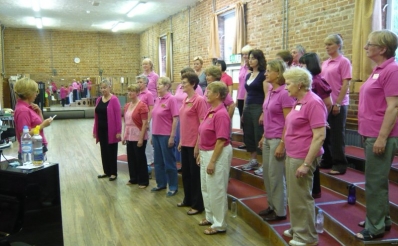
crystalchordsI spent Sunday up in Manchester working with Crystal Chords chorus, who are preparing for their second LABBS Convention under the direction of Monica Funnell. Their first contest together last autumn presented an ensemble that was developing fast, but still felt a little like work-in-progress. In the intervening months they have clearly settled into their new level of skills, although they still have that capacity to pick up new ideas quickly that characterises chorus that are undergoing rapid improvement.

The result was a most productive session. As a chorus, they were very open to coaching, and took evident pleasure in their discoveries and achievements. And we really got the benefit of the work on good vocal habits they have undertaken over the last year: at no point were our musical intentions held back by limitations in vocal technique.

When’s a Good Time to Ask for Feedback?

I recently had an email conversation with someone who wanted comments on an arrangement, that framed the request for feedback as a matter of urgency, as they wanted to get the teach tracks out to their chorus. As it happens, I was in a position to juggle my schedule to fit this in, but at the same time I felt it only fair to question whether this was the right moment to be doing this.

This is a conversation I used to have frequently with students in my years as a lecturer. It was a reasonably common pattern for someone to work on an essay at length and then come for feedback only a day or two before the deadline. Often this was because they either felt there was no point in bothering me while there were still things they knew needed fixing or because they were embarrassed to show me work in an obviously incomplete (and therefore as yet inadequate) state – which does feel a bit like answering the door in your pyjamas of course. Other times it had a more cynical motivation – ‘just tell me it’s going to pass’ – which I felt rather less sympathy for, but actually didn’t change the answer.

Welwyn Well in Harmony

Welwyn
I had a fun evening on Tuesday coaching Welwyn Harmony. Earlier in the year they had commissioned an arrangement from me of ‘When I Fall in Love’, and part of our agenda on Tuesday was to work on this. I never lose the thrill of the first time I hear an arrangement sung – it’s like being in two places at once to hear something that used to just exist inside my head becoming physically audible!

And of course the possibility that I might be asked to coach a group I’ve arranged for is an important force to keep me honest as an arranger. It’s so easy, when you’re sitting at home by yourself to think, ‘Well it’s a bit awkward, but I’m sure the baritones will manage it.’ But if you know you’re going to have to face them, and indeed help them round the obstacle course you’ve constructed for them, it’s a great motivation to make the effort to make the lines singable.

Indirectly Feeding the Birds

One of the highlights of last weekend’s BABS Convention, for me, was hearing Cottontown Chorus premiere four arrangements I had done for them based on the music from Mary Poppins. The big song-and-dance numbers were of course a wonderful arranging challenge, but it’s their ballad, ‘Feed the Birds’, I’d like to talk about today. I found it a fascinating song to arrange because it is so emotionally rich in effect, though its most memorable lyrics are utterly mundane. It is a wonderful case study in indirectness of expression, of how to evoke a deep emotional response without ever really stating in the lyric why anyone should care.

A Special Weekend

Cottontown flying kites to finish their show setCottontown flying kites to finish their show setLast weekend saw British barbershoppers descend in droves on Llandudno for the 2011 BABS convention. This one was a special one for me in several ways. First, because I had the honour of hearing no fewer than eight of my arrangements receive their first performances. Five were in the chorus contest (sung by Telfordaires, Tuxedo Junction and the Cottontown Chorus), one in the quartet finals (sung by the Serious Chord Squad), and two in the Sunday afternoon show. Current LABBS gold medallists Amersham A Cappella and retiring BABS champs, the Great Western Chorus, also aired arrangements of mine in the Saturday night show.

Waiting for the Magic to Happen

Back in December, Dan Newman wrote a wonderful post about the living through that moment in the arranging process that lies between the groundwork and the realisation. This is how he describes the experience:

I’m currently in the Land of Potential under the Shadow of OverAmbition. It’s a scary place.

This is the point in the process I have described as ‘magic happens here’, and I think anyone who arranges regularly will empathise exactly with Dan’s description of what this moment is like.

...found this helpful?

I provide this content free of charge, because I like to be helpful. If you have found it useful, you may wish to make a donation to the causes I support to say thank you.


Archive by date

Syndicate content Syndicate content